Your devices do not talk to each other.
You have good hardware, but the test still depends on manual switching, copy-paste data, and separate screens.
AUTOMATED TEST SYSTEMS FOR ADVANCED ENERGY
I help advanced nuclear and energy teams find what is fragile, connect the hardware, collect reliable data, and turn experiments into usable automated systems.
Remote engineering support + on-site commissioning
THE PROBLEM
Most engineering teams already have smart people and good hardware. The problem is the space between the devices: manual steps, messy data, missing GUIs, weak logging, and systems that only one person understands.
You have good hardware, but the test still depends on manual switching, copy-paste data, and separate screens.
People spend time starting devices, watching values, saving files, and repeating steps that software should handle.
The team cannot easily reconstruct the test, match readings to events, or compare runs with confidence.
If the one person who knows the scripts is unavailable, the test slows down or stops.
The test needs live status, controls, alarms, trends, logs, and clear actions, not a folder of scripts.
Before building, we map the control, data, safety, and handover needs so the system can grow cleanly.
LOW-RISK FIRST STEP
Find the 3 biggest reasons your test setup is wasting time, losing data, or creating unreliable results.
Send a short description of your setup: what you are testing, which devices are involved, how data is collected, and what feels fragile. I review it and tell you the first practical improvement before any larger project starts.
No meeting is needed first. Send the setup, and I will write back with the first useful diagnosis.
Find what is fragile in your test setup.
Based on real engineering, data acquisition, GUIs, testing, and nuclear/energy context.
I review the setup and point to the first useful fix.
Send a short description. No meeting needed at first.
WHAT I BUILD
No mystery language. These are the parts teams usually need when hardware has to become a working test system.
Turn a physical test setup into a repeatable system with clear steps, controls, state, and data capture.
Run tests faster with fewer manual mistakes.
Collect readings from sensors, instruments, DAQs, and embedded devices into structured, analysis-ready records.
Know what happened, when it happened, and why it matters.
Build screens that let engineers run tests, monitor live state, change setpoints, and review system behavior.
Operators see the system instead of guessing from raw devices.
Connect power supplies, sensors, motion systems, controllers, detectors, and lab instruments behind one workflow.
Separate devices start behaving like one test platform.
Add automatic responses, setpoint tracking, safety states, and control logic where the experiment needs closed-loop behavior.
The setup can react instead of waiting for a person.
Plan the system architecture, test flow, electrical/control concept, safety logic, data path, and handover approach.
You get clarity before the build becomes expensive.
WHY BELIEVE ME
My work sits where hardware, software, data, and operators meet. That is where experimental teams lose time, and where the right system creates leverage.
PROJECT PROOF + GUI DEMOS
Each project is shown once: first as the problem it solves, then as the kind of interface that makes the system usable.
High-temperature nuclear materials research
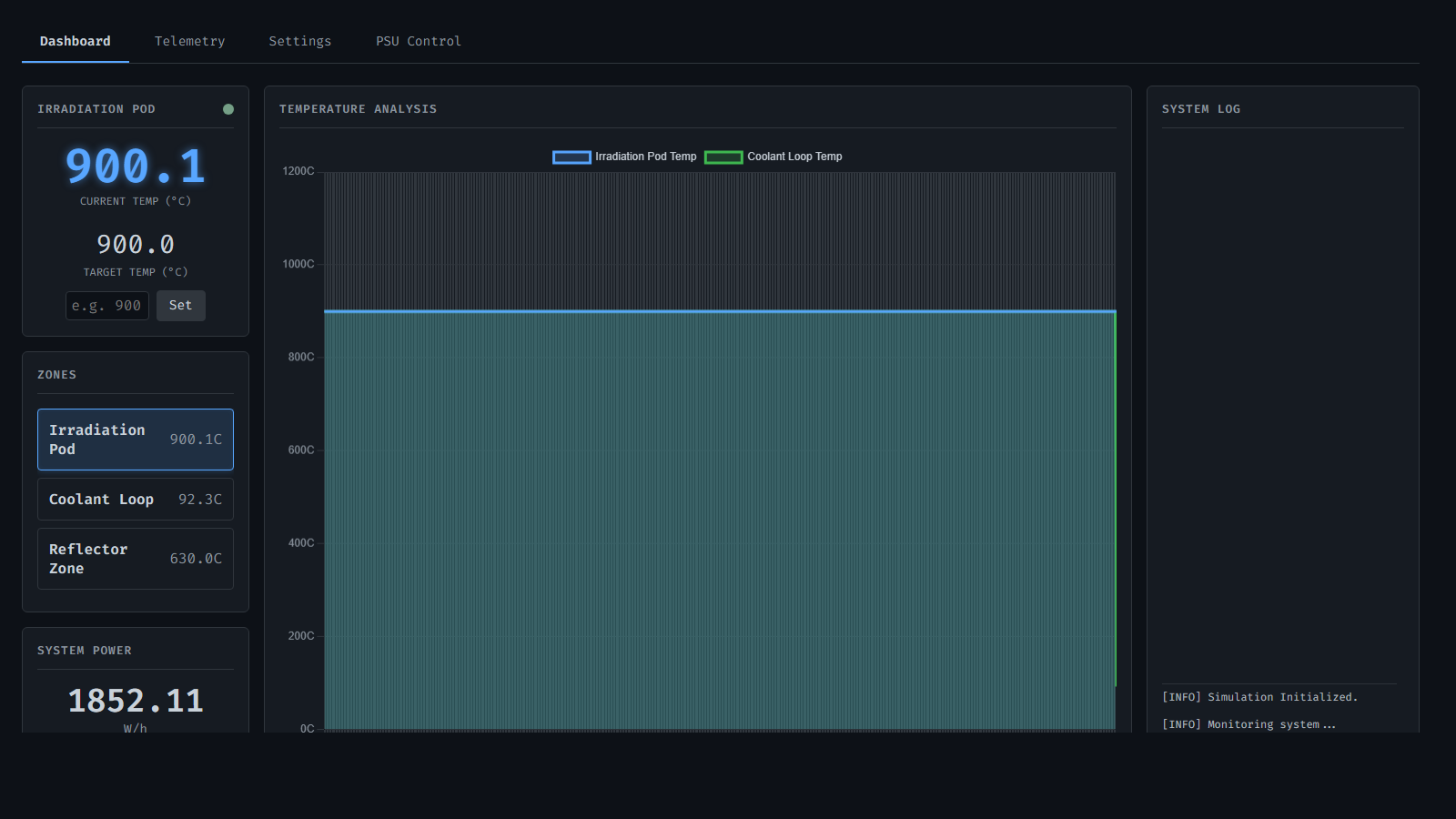
GUI demo
Multi-panel command center for high-temperature reactor material testing with zones, telemetry, power, logs, and target setpoints.
Reactor physics measurement workflow
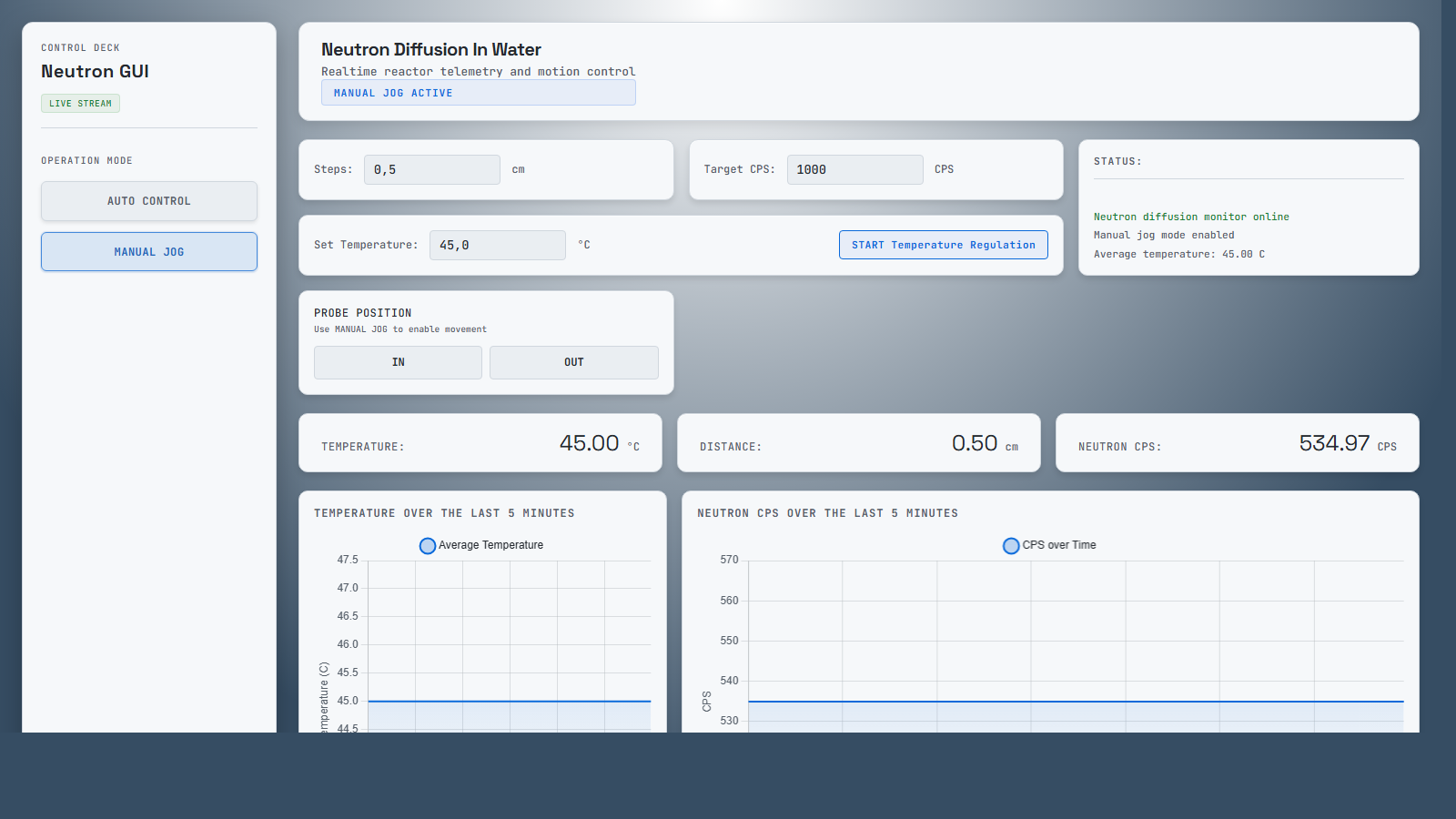
GUI demo
Motion-control and telemetry interface for a neutron diffusion experiment, including temperature control, CPS trends, and manual jog.
HOW WE WORK
01
We identify the devices, signals, manual steps, data outputs, operator actions, and current bottlenecks.
02
I define how the instruments, control logic, GUI, data logging, and safety states should work together.
03
The software is built around real hardware behavior, practical failure cases, and the way the team runs tests.
04
We check the system against real test behavior: data quality, state changes, edge cases, and operator workflow.
05
You get the system, documentation, run logic, and a clear path for future changes.
NEXT STEP
Send what you are testing, which devices are involved, how data is currently collected, and what feels slow, risky, or unclear. I will write back with the first useful diagnosis.